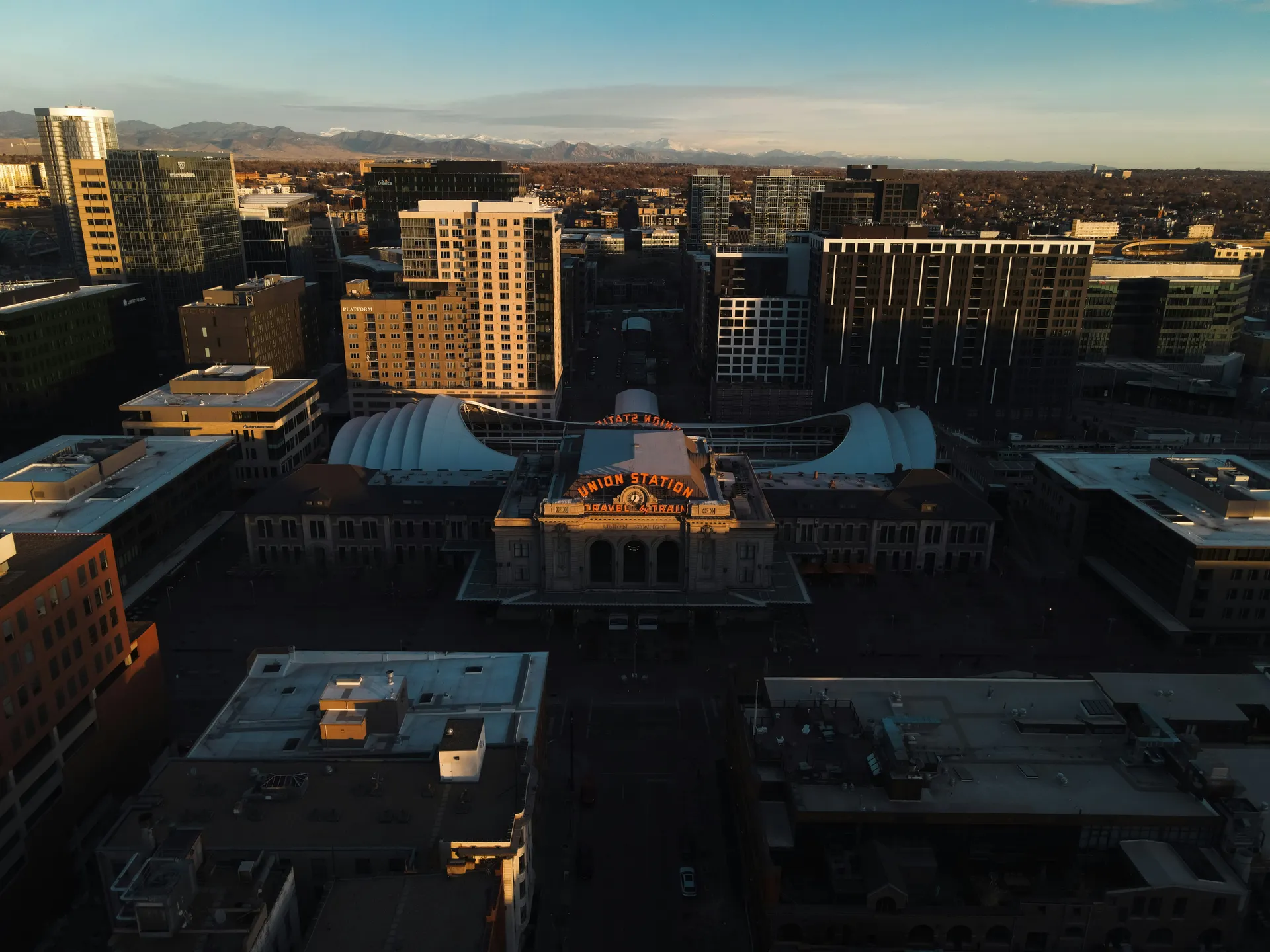
 Photo by Troy Allen on Unsplash
 Documentary filmmaking is often thought of as a purely human task. Some might call it a labor of love: from digging though archive footage and logging interviews, to managing the edit process and any resulting timelines, the workflow behind even a short documentary can be complex and time consuming.
Over the last year, our team has been closely watching developments in the artificial intelligence (AI) space, specifically as these tools were being tailored to creative industries. One one hand, there’s the potential AI can replace our work entirely, but that’s a very unlikely case. A more possible future is that AI, and the tools is provides, raises the standard for a kind of work documentary filmakers already excel at: that is, providing genuine human connection and a point of view on narratives you never would have noticed otherwise.
Let’s explore how using AI at Fictive Flame allows us to move faster, work smarter, and focus more on storytelling.
One of the most tedious stages in the post-production workflow is ingesting and organizing hours—or even hundreds of hours—of raw footage. Adding to the chaos, some of this footage is archival, while the remaining portion is from different cameras that were used on the shoots.
If you start the edit with all of these assets in your media bin, the resulting project will be better than if you didn’t. Yet, it’s still very common to take a short-cut around this type of pre-production task, slowly adding footage to the timeline as it becomes available. This is where AI can help, by automating transcription, facial recognition, object tagging, and scene detection; all of which make footage easier to search and assemble into the final timeline.
Instead of manually scrubbing through clips to find a key quote, AI can highlight it in seconds. Footage is cataloged and available at the press of a button. This allows editors and directors to spend more time on creative decisions and less on logistical ones.
AI-powered transcription tools aren’t just useful in the edit process. Once your project is complete, it’s now easier than ever to convert spoken dialogue into multilingual closed captions, making cross-border storytelling more accessible and breaking language barriers that used to slow production or require expensive services.
Whether you’re producing a film with global interviews or repurposing content for international audiences, AI can help bridge the linguistic gaps quickly and affordably, so long as you ensure it’s checked by a local speaker for context and clarity.
With AI-driven platforms that support cloud workflows, production teams scattered across time zones can collaborate in real-time. Platforms like Blackmagic Cloud and Frame.io can synchronize transcripts, label footage, and update project changes across collaborators instantly, which speeds up communication.
AI can also analyze footage for tone, pacing, and visual patterns, offering intelligent suggestions on cuts or transitions. Some tools even create rough assembly edits automatically, which serve as starting points for editors. This is becoming increasingly clear every day with tools like the new DaVinci Resolve 20, which supports many of these workflows out of the box.
This doesn’t mean editors are out of a job; it means they start further down the track, with more time to finesse the storytelling rather than assemble it from scratch. In an increasingly remote and global industry, this kind of efficiency is no longer a luxury. And it doesn’t just benefit the large organizations, either. Our studio in Colorado works remotely as part of a global creative network, thanks to modern technology.
Some documentary subjects require deep research, often before you even know if the topic is worthwhile. Climate change, economic inequality, social trends and other big questions often come with equally large datasets. AI can help summarize and visualize information, and possibly even suggest narrative angles on the underlying data.
For investigative or explanatory films, AI becomes a research partner, uncovering patterns and relationships that might otherwise be missed.
Tools are never the problem, how we use them is. Viewed though that lens, AI isn’t about taking shortcuts: it’s clearing entirely new paths by automating the most repetitive tasks. AI can give back valuable time, needed for storytellers to do their best work: that is, transforming human experiences into emotional narratives.
While AI will never be able to capture a sunrise at a specific time or wait for the right moment in an interview, it can be a valued technical asset. For smaller production companies, this push can mean the difference between finishing a project or shelving it indefinitely.
AI isn’t replacing creativity, it is making space for it.
You have a story. We have the gear and the goods, so why not reach out?